
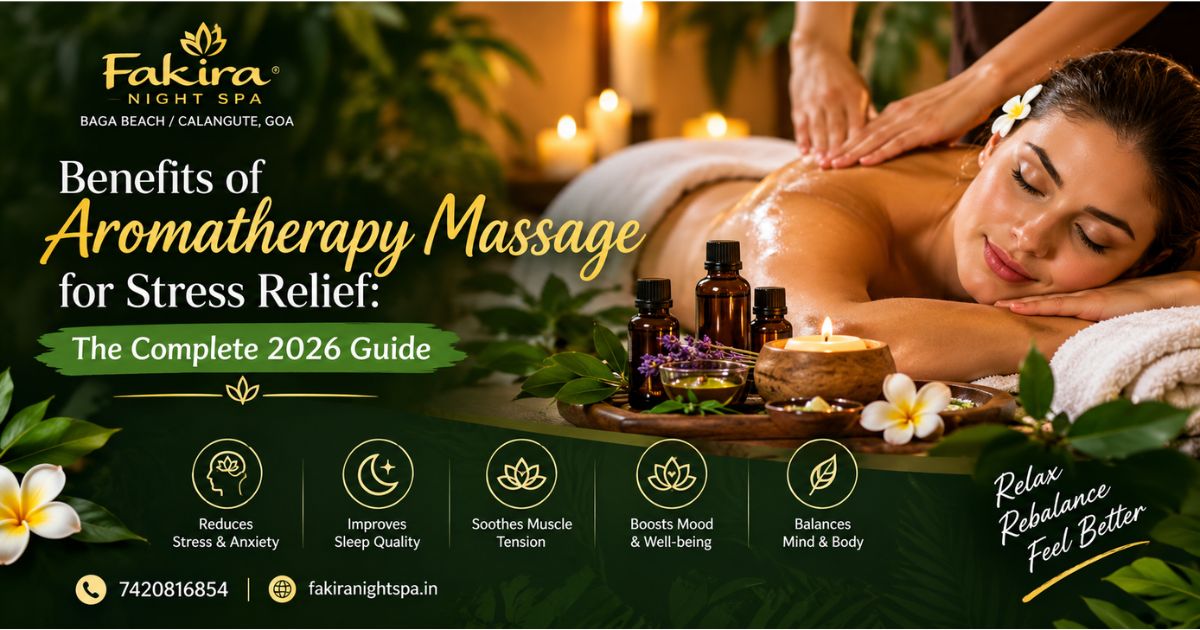
If you’ve been searching for a natural way to unwind, you’ve probably already come across the benefits of aromatherapy massage for stress relief. This centuries-old healing technique blends the power of therapeutic touch with the calming, mood-lifting properties of pure essential oils — and modern research is finally catching up to what wellness practitioners have known for generations. Studies on lavender, bergamot, and chamomile oils show measurable drops in cortisol, anxiety, and muscle tension after just one session. Whether you’re dealing with work burnout, sleepless nights, or chronic tension headaches, an aromatherapy massage session can reset your nervous system and leave you feeling lighter within the hour. In this guide, we’ll break down exactly how aromatherapy massage works, the science-backed benefits, the best essential oils for stress, and why Fakira Night Spa has become the go-to destination for anyone serious about deep, lasting relaxation.
What Is Aromatherapy Massage?
Aromatherapy massage is a therapeutic bodywork technique that combines traditional massage strokes — kneading, gliding, and gentle pressure — with diluted essential oils chosen for their specific emotional and physical effects. Unlike a standard massage that uses plain lotion or oil, an aromatherapy massage is built around a scent profile designed to calm the nervous system, ease muscular tension, and improve mood while the therapist works on your body.
The essential oils are absorbed in two ways during the session:
- Through the skin, where diluted oils penetrate the epidermis and interact with soft tissue.
- Through inhalation, where scent molecules travel through the olfactory system directly to the limbic system — the part of the brain responsible for emotion and memory.
This dual-action delivery is exactly why aromatherapy massage tends to produce faster, deeper relaxation than massage or aromatherapy alone.
How Aromatherapy Massage Works on the Body and Brain
When you inhale an essential oil, aroma molecules stimulate receptors in your nose that send signals straight to your brain’s limbic system and hypothalamus. This triggers the release of feel-good neurotransmitters like serotonin and dopamine, while simultaneously calming the sympathetic (“fight or flight”) nervous system. At the same time, massage strokes activate the parasympathetic nervous system, lower cortisol levels, and boost circulation — so you get a two-pronged stress-relief effect that neither technique achieves on its own.
Here’s a simplified breakdown of how the process unfolds during a typical session:
| Stage | What Happens | Effect on the Body |
|---|---|---|
| Inhalation | Essential oil molecules reach the limbic system | Mood lifts, anxiety drops |
| Skin absorption | Diluted oils absorb through pores during massage | Localized muscle relaxation |
| Touch stimulation | Massage strokes trigger the parasympathetic nervous system | Lower heart rate, lower cortisol |
| Hormonal response | Serotonin and endorphins increase | Improved sleep, reduced pain perception |
Top Benefits of Aromatherapy Massage for Stress Relief
Aromatherapy massage isn’t just a pampering session — it’s a genuinely effective tool for managing chronic stress. Here are the most notable, research-supported benefits:
- Lowers Cortisol and Anxiety Levels — Multiple clinical studies have found that aromatherapy massage significantly reduces anxiety in patients before surgery, in shift-working nurses, and in people managing everyday work stress.
- Improves Sleep Quality — A review of numerous studies found aromatherapy improves sleep by reducing stress, pain, and fatigue — especially when lavender or chamomile oils are used.
- Eases Muscle Tension and Chronic Pain — Lavender-based aromatherapy massage has been shown to reduce pain intensity in conditions ranging from tension headaches to joint pain.
- Boosts Mood and Reduces Symptoms of Depression — The scent-driven activation of serotonin and dopamine pathways makes aromatherapy massage a natural mood booster.
- Regulates the Nervous System — Essential oils influence the HPA axis and the sympathetic nervous system, helping the body shift out of “stress mode” faster.
- Increases Energy and Reduces Fatigue — Citrus and rosemary-based blends are frequently used to fight mental fatigue and sluggishness.
- Supports Healthy Circulation — The combination of touch and warming oils encourages better blood flow throughout the body.
- Strengthens the Mind-Body Connection — Clients frequently report a stronger sense of calm, presence, and emotional balance after regular sessions.
- Enhances Skin Health — Diluted carrier oils used in aromatherapy massage (like coconut, grapeseed, and jojoba) nourish and hydrate the skin.
- Provides a Non-Invasive Complement to Traditional Stress Management — It pairs well with therapy, exercise, and medical treatment without side effects when done correctly.
Aromatherapy Massage vs. Regular Massage: What’s the Difference?
People often ask whether it’s worth paying extra for an aromatherapy massage over a standard one. Here’s a side-by-side comparison:
| Feature | Regular Massage | Aromatherapy Massage |
|---|---|---|
| Oils used | Plain massage oil/lotion | Essential oils blended with carrier oils |
| Primary goal | Muscle relief, circulation | Stress relief + muscle relief + mood boost |
| Sensory experience | Touch only | Touch + scent + emotional response |
| Nervous system impact | Moderate parasympathetic activation | Stronger, faster parasympathetic activation |
| Customization | Pressure-based only | Pressure + scent profile personalized to mood/needs |
| Best for | General tension | Stress, anxiety, insomnia, emotional fatigue |
Best Essential Oils Used in Aromatherapy Massage for Stress
Not all essential oils are created equal when it comes to stress relief. Skilled therapists — like the team at Fakira Night Spa — select oils based on your specific needs during consultation.
| Essential Oil | Primary Benefit | Best For |
|---|---|---|
| Lavender | Reduces anxiety, improves sleep | Insomnia, general stress |
| Bergamot | Lifts mood, eases mild depression | Emotional fatigue |
| Chamomile | Calms nervous system, reduces tension | Anxiety, irritability |
| Ylang-Ylang | Lowers blood pressure, promotes calm | High-stress lifestyles |
| Sandalwood | Grounding, reduces mental chatter | Overthinking, restlessness |
| Frankincense | Deepens relaxation, eases breathing | Meditation-style relaxation |
| Eucalyptus | Clears the mind, relieves headache tension | Tension headaches |
| Rosemary/Citrus | Energizes, reduces fatigue | Low energy, brain fog |
What to Expect During an Aromatherapy Massage Session at Fakira Night Spa
Walking into your first aromatherapy massage doesn’t need to be intimidating. Here’s exactly how a session typically flows at Fakira Night Spa:
- Consultation — Your therapist asks about your stress triggers, sleep patterns, and any areas of tension so they can choose the right essential oil blend for you.
- Ambient Setup — The room is prepared with dim lighting, soft music, and a warmed essential oil diffuser to start calming your nervous system before the massage even begins.
- Oil Application — A custom blend of diluted essential oils is warmed and applied to the skin.
- Massage Technique — Therapists alternate between gentle gliding strokes and firmer pressure depending on your tension level and comfort.
- Breathing Guidance — Many therapists at Fakira Night Spa incorporate simple breathing cues to help you inhale the aroma more deeply and deepen relaxation.
- Cool-Down Period — You’re given a few quiet minutes at the end to let the essential oils and massage effects settle before returning to your day.
Most clients describe leaving a Fakira Night Spa aromatherapy session feeling noticeably lighter, calmer, and more clear-headed — often for days afterward.
Who Should (and Shouldn’t) Try Aromatherapy Massage
Aromatherapy massage is safe for most people, but a few precautions are worth knowing:
Good candidates include:
- People dealing with chronic work stress or burnout
- Those struggling with occasional insomnia
- Anyone managing mild anxiety or low mood
- People with tension headaches or muscular tightness
- Individuals looking for a non-medication approach to relaxation
Use caution or consult a doctor first if you:
- Are pregnant or breastfeeding
- Have asthma or another respiratory condition
- Suffer from migraines triggered by strong scents
- Have a known allergy to specific essential oils
- Are currently on prescription medication
This is exactly why the licensed therapists at Fakira Night Spa always begin with a short consultation — so your oil blend and pressure level are tailored safely to your body and health history.
Why Choose Fakira Night Spa for Aromatherapy Massage
There are plenty of spas offering “aromatherapy” on their menu, but very few actually deliver the full sensory and therapeutic experience the treatment is meant to provide. Here’s what sets Fakira Night Spa apart:
- Certified, experienced massage therapists trained specifically in aromatherapy techniques — not just general Swedish or deep tissue massage with scented oil added on.
- Premium, pure essential oils — no synthetic fragrance blends that can trigger headaches or skin irritation.
- Personalized oil consultations before every session, matching your scent profile to your stress symptoms and goals.
- Calm, private treatment rooms designed specifically for full sensory relaxation — soft lighting, curated music, and zero distractions.
- Flexible session lengths and packages to fit stress-relief into even the busiest schedule.
- Consistently high client satisfaction from repeat clients who use aromatherapy massage as an ongoing stress-management routine, not a one-time treat.
If you’ve been putting off self-care because you weren’t sure it would “actually work,” Fakira Night Spa’s aromatherapy massage program is designed to change that mindset — with real, feel-it-immediately results.
How Often Should You Get an Aromatherapy Massage?
Consistency matters more than intensity when it comes to stress relief. Here’s a general guideline:
| Stress Level | Recommended Frequency |
|---|---|
| Mild, occasional stress | Once a month |
| Moderate, ongoing work stress | Every 2–3 weeks |
| High stress, burnout, or insomnia | Weekly for 4–6 weeks, then taper to biweekly |
| Maintenance / general wellness | Monthly ongoing sessions |
The team at Fakira Night Spa can help you build a personalized frequency plan based on your stress levels, schedule, and goals during your first visit.
Conclusion
The benefits of aromatherapy massage for stress relief go far beyond a pleasant scent and an hour of quiet. Backed by real clinical research, this therapy works on both a physiological and emotional level — lowering cortisol, easing muscle tension, improving sleep, and lifting mood, all through the combined power of touch and essential oils. If chronic stress, anxiety, or poor sleep have been weighing you down, an aromatherapy massage could be one of the simplest, most enjoyable changes you make to your routine this year. And if you want it done right — with pure oils, personalized blends, and therapists who genuinely understand the science behind the scent — Fakira Night Spa is the place to experience it. Book your session today and feel the difference from the very first appointment.
FAQs About Aromatherapy Massage for Stress Relief
1. What is the main benefit of aromatherapy massage?
The main benefit is combined stress relief — aromatherapy massage lowers cortisol, eases muscle tension, and improves mood simultaneously, more effectively than massage or aromatherapy used alone.
2. How long does an aromatherapy massage session usually last?
Most sessions run between 60 and 90 minutes, though shorter 30-minute add-on sessions are also available at Fakira Night Spa for quick stress relief between busy days.
3. Which essential oil is best for stress relief?
Lavender is the most widely studied and used essential oil for stress and anxiety relief, followed closely by chamomile and bergamot for mood support.
4. Is aromatherapy massage safe during pregnancy?
Some essential oils are not recommended during pregnancy. It’s important to inform your therapist so they can select pregnancy-safe oils or recommend an alternative treatment.
5. How often should I get an aromatherapy massage for stress?
For ongoing stress management, every two to three weeks is generally effective. For acute burnout or insomnia, weekly sessions for a few weeks tend to show faster results.
6. Can aromatherapy massage help with anxiety and depression?
Research shows aromatherapy massage can meaningfully reduce symptoms of anxiety and mild depression by influencing serotonin and dopamine pathways in the brain.
7. Where can I get a professional aromatherapy massage near me?
Fakira Night Spa offers professionally administered aromatherapy massage sessions with certified therapists, premium essential oils, and personalized consultations to match your specific stress-relief needs.
Contact Fakira Night Spa
Location: North Goa (Baga Beach / Calangute)
Website: https://fakiranightspa.in
Phone: +91 7420816854